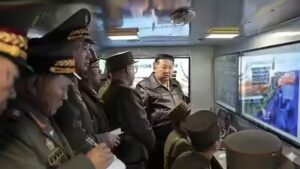
In a significant military development, Kim Jong Un has overseen the testing of upgraded tactical ballistic missiles equipped with cluster warheads. According to Korean Central News Agency, these tests aim to enhance North Korea’s short-range strike capabilities and modern warfare readiness.
For candidates preparing for the SSB Interview, such global defence developments are critical topics that can be discussed in Group Discussions, Lecturette, and Personal Interviews.
What Happened in the Latest Missile Test?
North Korea conducted a series of missile launches involving the Hwasongpho-11 Ra system.
Key Highlights:
- Five missiles were launched
- Target distance: Approximately 136–140 km
- Impact area: Around 12.5–13 hectares
- Launch location: Sinpo region (suspected coastal/submarine-based launch)
According to reports, the missiles demonstrated high-density strike capability, indicating a major advancement in tactical warfare systems.
What is a Cluster Warhead?
A cluster warhead is a type of payload that disperses multiple smaller explosives (bomblets) mid-air over a wide area.
Key Features:
- Covers large target areas
- Effective against personnel, vehicles, and infrastructure
- Difficult to intercept once deployed
However, these weapons are highly controversial due to their humanitarian risks. Many bomblets fail to explode immediately, leaving behind dangerous unexploded ordnance.
North Korea is not part of the Convention on Cluster Munitions, which bans the use of such weapons.
Why is North Korea Testing These Weapons?
The primary objective behind these tests is to enhance modern warfare capabilities.
Strategic Reasons:
- Improved Strike Efficiency
Cluster warheads increase the probability of hitting multiple targets simultaneously. - Overcoming Missile Defence Systems
Once the warhead disperses, interception becomes extremely difficult. - Military Modernisation
North Korea is continuously upgrading its arsenal with advanced systems, including:
- Electromagnetic weapons
- Carbon-fibre bombs
- Mobile air defence systems
Regional Security Concerns
The missile tests have raised alarms in neighbouring countries like South Korea and Japan.
South Korea’s military confirmed:
- Detection of multiple missile launches
- Emergency security meetings conducted
- Strong defence posture maintained with the United States
The proximity of the test range to Seoul highlights the immediate threat potential of these weapons.
Impact on Global Defence Dynamics
North Korea’s actions signal:
- Rising tensions in the Indo-Pacific region
- Increased focus on missile defence systems
- Challenges in arms control agreements
Such developments are frequently discussed in defence-related topics during the SSB Interview, making them highly relevant for aspirants.
SSB Interview Perspective: Why This Topic Matters
For SSB Interview candidates, this topic is extremely important because:
1. Defence Awareness
Understanding global military trends is essential.
2. Analytical Ability
You should be able to explain:
- Why countries develop such weapons
- Their strategic implications
3. Communication Skills
This topic can be used effectively in:
- Lecturette
- Group Discussion
- Personal Interview
Ethical and Humanitarian Concerns
Cluster munitions are widely criticised due to:
- Civilian casualties
- Long-term environmental risks
- Unexploded bomblets causing future harm
Failure rates of these weapons can range from 2% to over 40%, making them a persistent danger even after conflicts end.
Conclusion
The recent missile tests conducted under Kim Jong Un highlight North Korea’s ongoing efforts to strengthen its tactical military capabilities. While these advancements improve combat efficiency, they also raise serious concerns about regional stability and humanitarian impact.
For aspirants preparing for the SSB Interview, staying updated with such developments not only enhances knowledge but also helps in presenting well-informed and confident responses during the selection process.